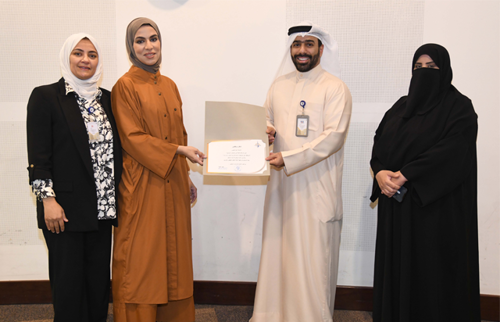
Under the patronage of the Director General of the Public Authority for Applied Education and Training,
Dr. Hassan Mohammed Al-Fajam,
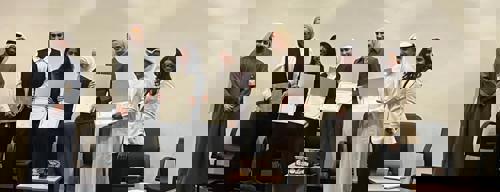
and organized by the Public Relations and Media Department, in collaboration with the College of Nursing, the Nursing Institute, and the College of Health Sciences, the activities of Public Health Month were held under the slogan “Promoting Health to Enhance Life.”
Public Health Month Event Highlights: “Promoting Health to Enhance Life”
Under the patronage of the Director General of the Public Authority for Applied Education and Training,
Dr. Hassan Mohammed Al-Fajam,
and organized by the Public Relations and Media Department, in collaboration with the College of Nursing, the Nursing Institute, and the College of Health Sciences, the activities of Public Health Month were held under the slogan “Promoting Health to Enhance Life.”
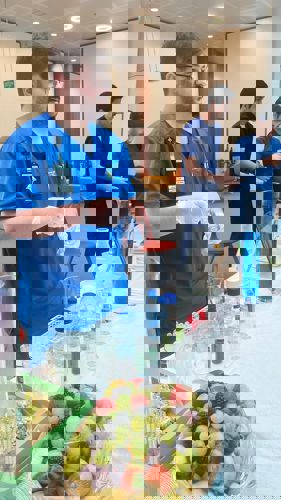
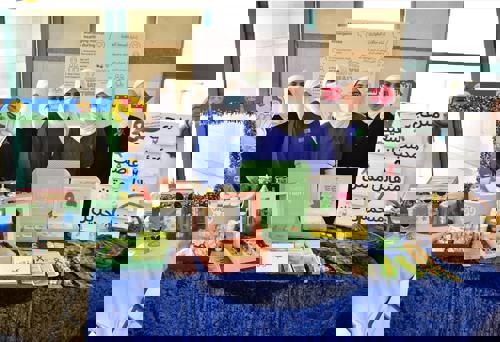
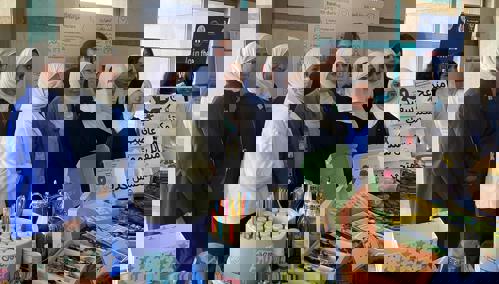
As part of the Authority’s efforts to foster collaboration among its academic units and to empower students to take an active role in promoting health awareness, the College of Nursing participated in the second week of the event, themed “Food for Sustainable Health.” The participation was led by Ms. Nawal Al-Qallaf, Ms. Sarah Al-Houti, and Ms. Shamoukh Al-Shuwaib from the General Sciences Unit, through their interactive and educational booth titled “Body Chemistry.”
The booth attracted wide attention from visitors for its innovative chemistry-based demonstrations that linked science to everyday health practices.
The activities focused on understanding the body’s pH balance and the effects of dietary habits on human health through a series of engaging experiments:
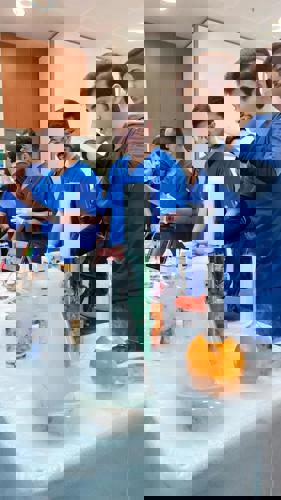
• The first experiment demonstrated what happens to the human body when consuming highly acidic foods and beverages such as soft drinks and fast food. The experiment used dry ice placed inside a large cylinder containing a green-colored alkaline solution treated with a universal indicator. When dry ice was added, the solution gradually turned yellow, releasing a cloud of gas that created a fascinating visual effect. This represented how consuming high-acidity foods can disrupt the body’s natural alkaline balance.
• The second experiment highlighted the large amounts of sugar hidden in common foods, helping visitors visualize how excessive sugar intake affects overall health.
• The third experiment guided participants on how to choose suitable drinking water to maintain the body’s alkalinity by reading the pH numbers printed on bottled water labels. Also using a universal indicator to test different water samples and comparing the colors with the pH scale.
• The fourth experiment showcased how to create a natural homemade pH indicator from red cabbage. After boiling the cabbage and using its colored extract, participants mixed it with acidic substances such as lemon juice and observed a beautiful color change to pink — a simple yet captivating example of practical chemistry in everyday life.
The event took place on Tuesday, November 11, 2025, and received enthusiastic feedback from attendees, who praised the creativity and excellence of the participating students, describing them as the “stars of the event.” Their ability to simplify complex scientific ideas and present them through interactive experiments reflected both their scientific understanding and communication skills.